

American Express to Acquire Hyper

Hey Payments Fanatic!
American Express announced that it has entered into an agreement to acquire Hypercard (Hyper), an agentic expense management company, adding to Amex’s AI expertise and capabilities.
According to the announcement, Hyper’s team of AI experts will help American Express continue to build agentic tools and AI-powered solutions that help businesses automate processes and simplify operations.
The history between both companies goes back to 2024, when they partnered to launch the Hypercard Rewards American Express card with embedded AI-powered expense agents leveraging the Agile Partner Platform. Since then, Hyper has continued to focus and refine its agentic expense management capabilities.
Chairman and CEO Stephen J. Squeri outlined the company’s strategy and how AI is transforming the way AMEX operates in his annual letter to shareholders, where he mentions agentic commerce 20 times, clearly stating that it is a priority for them.
The acquisition of Hyper builds on these plans by bolstering the company’s AI talent and capabilities.
Track the latest news across the payments landscape below. 👇See you tomorrow!
Cheers,
INSIGHTS
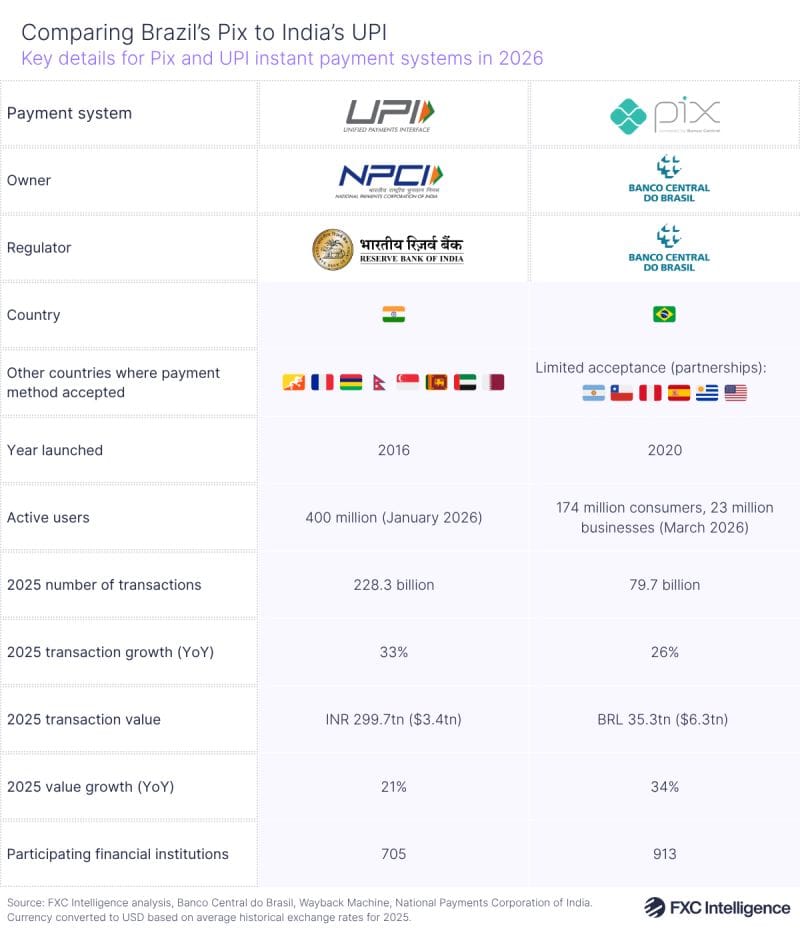
PIX 🇧🇷 🆚 UPI 🇮🇳
Two of the most successful instant payment systems in the world. And both are now entering their next phase:
NEWS
🇺🇸 Lobster.cash partners with Mastercard to enable secure AI agent payments for all existing cardholders. The solution will integrate Mastercard Agent Pay and Verifiable Intent, allowing AI agents on open platforms to transact securely using consumers’ existing cards.
🌍 Bybit announced its Bybit Card reached 3 million users, driven by everyday spending and global partnerships. Since its launch, Bybit Card has seen strong global adoption as users increasingly incorporate it into their daily spending. It supports crypto-to-fiat payments, cashback rewards, and mobile wallets, positioning it as a bridge between digital assets and daily transactions.
🇺🇸 Stablecoin issuer Circle faces a class action lawsuit led by a Drift Protocol investor, alleging it failed to freeze $230M in stolen USDC during a $280M exploit. The suit claims funds were moved across chains without intervention, raising questions over whether firms must act during hacks.
🇺🇸 American Express agreed to acquire Hyper to strengthen its AI capabilities and expense management offering. Hyper’s team and agentic tools will support automation and help businesses streamline operations across Amex’s commercial services platform. The acquisition is expected to close within the second quarter of 2026, subject to closing conditions.
🇸🇪 Klarna will soon be available through Swedbank Pay, giving its merchant network across the Nordics access to Klarna’s payment options. The integration expands Klarna’s reach in Sweden, Norway, Denmark and Finland, with rollout starting in Sweden later this year and in other markets from early 2027.
🇨🇴 Banco de Bogotá enabled debit and credit cards in Google Pay, allowing users to make contactless payments via NFC and integrate with Google Wallet. The update strengthens its digital payments offering with tokenization to enhance transaction security.
🇨🇴 Global66 launches “Vaults,” a feature that lets users separate and protect funds in COP, USD, and EUR. It includes two-factor authentication and a 48-hour delay on withdrawals above $1,000, adding a layer of control amid rising digital fraud concerns in Colombia. Read on
GOLDEN NUGGET
Most FinTechs are still getting FX wrong at checkout. And it’s quietly killing conversion.
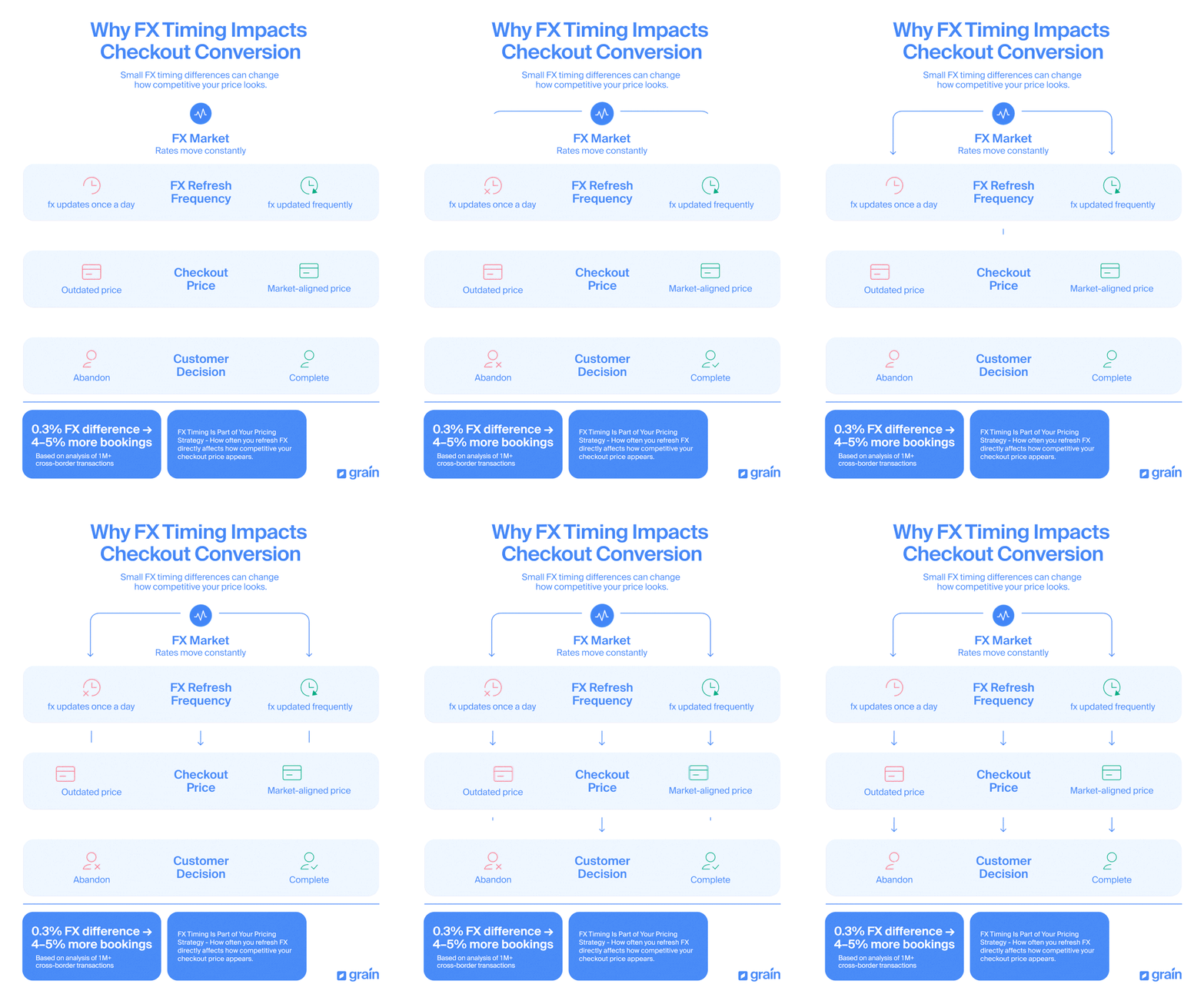
Here’s what the data shows:
FX pricing isn’t just a treasury decision anymore.
It’s a customer experience lever.
Most cross-border platforms still update FX rates once per day.
That sounds harmless… but it creates a hidden problem:
→ By the time a user reaches checkout, the rate is already outdated
→ Even small intraday FX movements make prices look slightly off
→ In competitive flows, that’s enough to trigger hesitation (or abandonment)
The fix is surprisingly simple:
Update FX more frequently (e.g. every 15 minutes or in real-time).
Why it matters:
• Prices stay aligned with live market conditions
• No need for large safety buffers
• Pricing feels more fair and predictable to users
And that perception matters more than most realize.
The impact (based on 1M+ transactions):
• Prices with fresher FX were more competitive in 88–98% of cases
• Even small improvements led to 3–5% higher conversion rates
In high-volume businesses, that’s not marginal.
That’s millions in incremental revenue.
The bigger shift:
FX is no longer just backend infrastructure.
It’s part of your front-end pricing strategy.
→ Static FX = friction
→ Dynamic FX = trust
And trust converts.
I highly recommend reading the complete source article by Grain for more interesting info & stats on this topic.
Want your message in front of 100.000+ FinTech fanatics, founders, investors, and operators?
Shoot me a message on LinkedIn or send me an e-mail.



Comments ()