

Open USD Launches with Visa, Stripe and Mastercard Backing
Hey Payments Fanatic!
A new dollar stablecoin backed by some of the biggest names in payments has just launched.
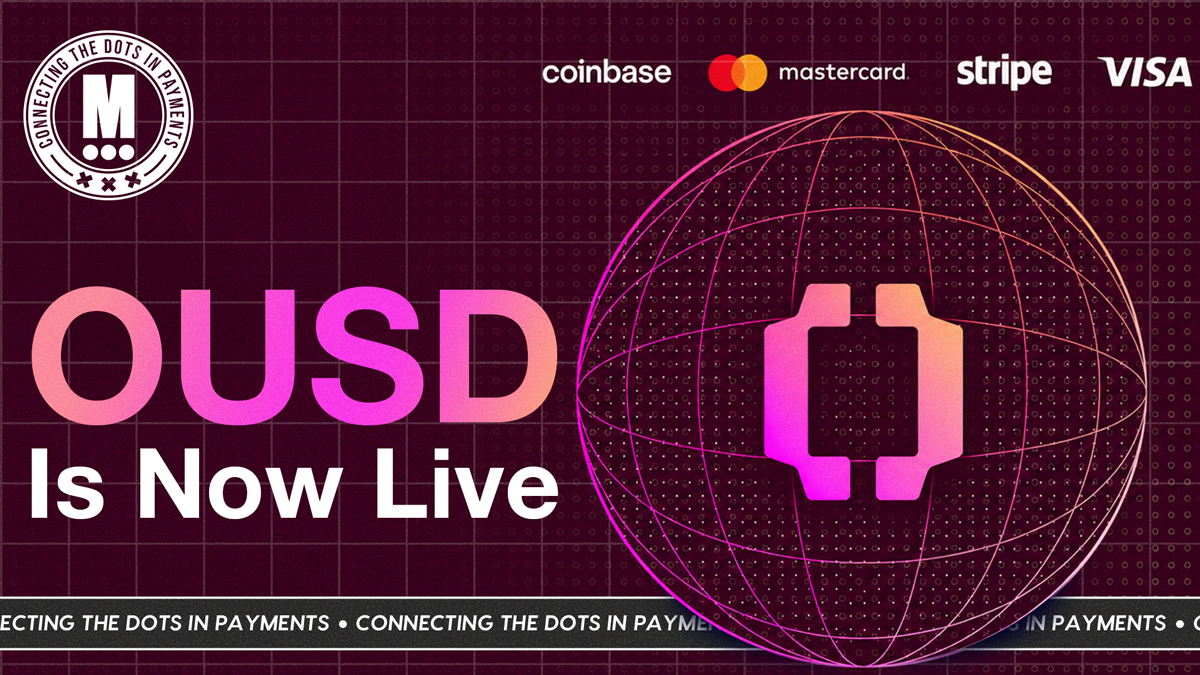
Mastercard, Stripe, Visa, Coinbase and Shopify are backing Open USD (OUSD), a new stablecoin from the Open Standard initiative, issued by Stripe subsidiary Bridge.
OUSD is designed for businesses to use for payments, settlement and cross-border transactions, and will run across networks including Ethereum, Solana, Base and Tempo.
But there's another interesting piece here.
Open Standard is also working with Infinia to bring OUSD into emerging markets, connecting it to local payment rails like Pix in Brazil, SPEI in Mexico, and Transferencias 3.0 in Argentina.
So this isn't just about launching another stablecoin.
It's about trying to connect a dollar-based digital asset with the payment systems businesses already use locally.
And if you're heading to Las Vegas for Money20/20, there’s another way to connect with the payments community. Maple and Connecting the Dots in FinTech are hosting an intimate dinner on Monday, October 19. One table, 2.5 hours, great conversations, and no pitches or presentations. You can register here
Here’s what else is happening in payments today👇
See you tomorrow!
Cheers,
INSIGHTS
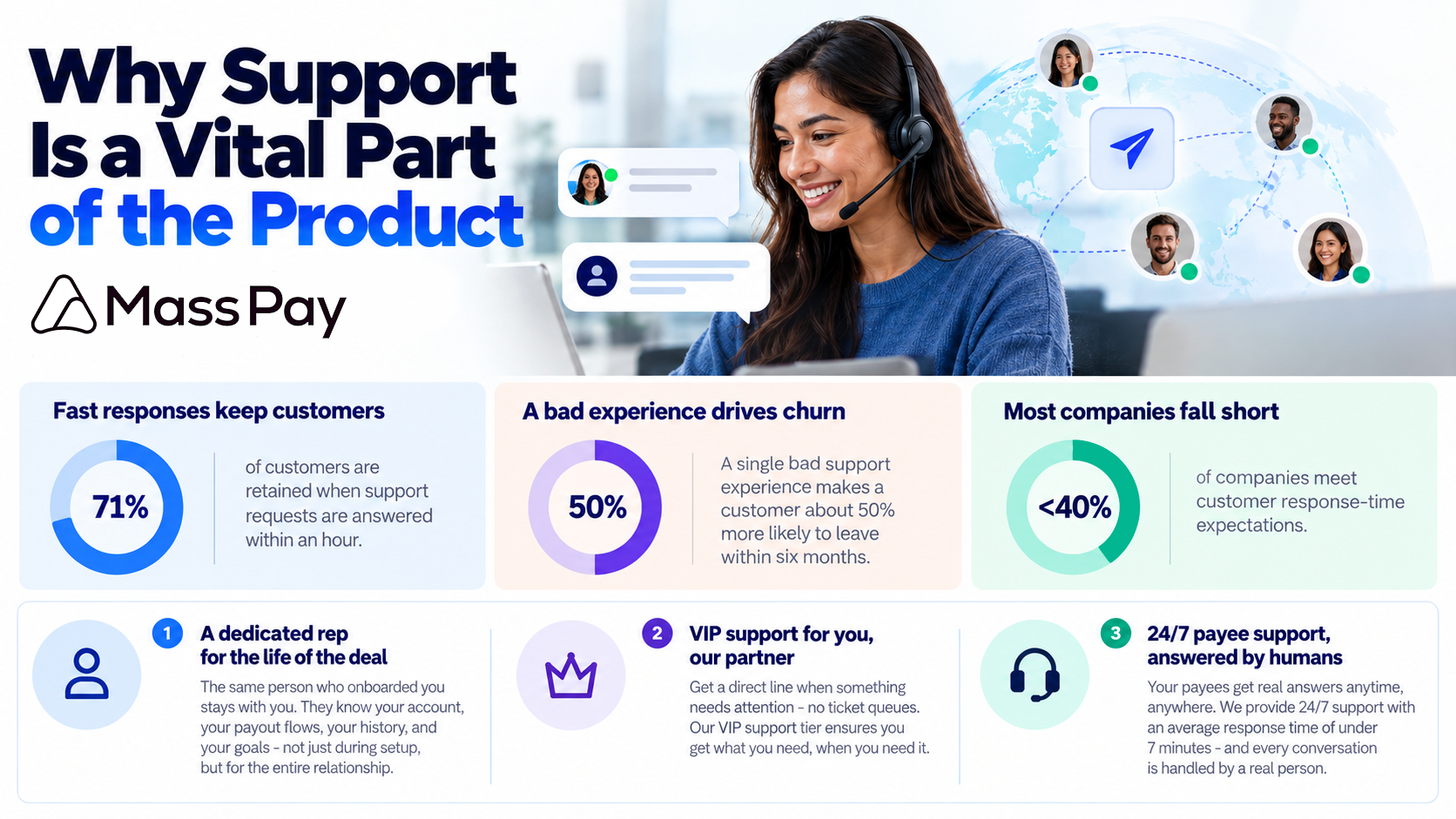
💡 MassPay: What happens when a payment gets stuck at 2 a.m.? The technology can move the money, but someone still needs to solve the problem when things go sideways. MassPay explores why support should be built into the product itself, with dedicated account support for clients and 24/7 human assistance for payees. Why support matters in payments
NEWS
🌐 Open Standard issues a dollar stablecoin backed by Visa, Stripe, and Mastercard. The consortium-backed token aims to establish an open, interoperable stablecoin standard for global payments infrastructure.
🇺🇸 Mastercard advances agentic commerce with new trust and intelligence services for AI-initiated transactions. The Agent Pay expansion adds a probability score and shared signals to help banks and merchants authorize agent-led purchases with greater confidence. Partners include Cloudflare and Skyfire.
🌍 Mastercard partners with Mojaloop and AfricaNenda to advance interoperable payments infrastructure across Africa. The collaboration aims to connect instant payment systems and expand financial inclusion across the continent by linking domestic payment networks.
🇺🇸 Kroger launches the Kroger Rewards World Elite Mastercard, a new everyday spend credit card with no annual fee. Powered by Imprint, the card lets customers earn up to 5X Points on Kroger.com purchases and redeem rewards for grocery and fuel savings.
🌎 Open Standard and Infinia partner to bring Open USD infrastructure to emerging markets. Infinia connects local clearing grids — including Pix, SPEI, and Transferencias 3.0 — to enable compliant fiat-to-digital asset flows across Latin America, Africa, and Asia.
🇬🇧 Noah founder Shah Ramezani discusses stablecoin-powered cross-border B2B payments with Fintechly. He forecasts the sector growing from around $13B this year to over $500B by 2030, calling regulation the moat for winners.
🌎 Yuno partners with Cyclops to expand stablecoin payments for global businesses. Enterprise merchants, banks, and wallets can now access 30+ stablecoin infrastructure providers through Yuno's existing API and routing tools.
🇺🇸 Stripe agrees to acquire Parafin, expanding embedded lending for platforms and small businesses. Parafin has helped over 60,000 businesses access capital since 2020, serving platforms including DoorDash, Gusto, and Mindbody with credit, Pay Over Time, and Spend products. Read more
🇮🇳 Apple Pay launches in India, bringing contactless payments to Axis Bank credit card holders across Visa and Mastercard networks. The service is accepted at millions of merchants and supported by PSPs including Razorpay, Paytm, Pine Labs, and PayU, with more merchants and apps coming over time.
🇪🇺 Bancomat, Bizum, Wero, SIBS and Vipps form the European Network for Payments, a new Madrid entity to connect their solutions via a common A2A interoperability hub. The five partners already serve approximately 130 million users across 13 European countries, with cross-border P2P payments rolling out first.
🇯🇵 Binance Pay enables payments at PayPay merchants in Japan via HIVEX® for inbound travelers. Approximately 48 million eligible Binance Pay users across 100+ countries can now make purchases at millions of PayPay merchant locations nationwide, with merchants settled in yen.
🇬🇧 Ecommpay launches Partial Approval, turning declined card payments into completed transactions. Merchants can now collect lower top-up amounts without forcing customers to restart the payment flow, reducing drop-off at checkout.
🇪🇺 ECB puts AI agent payments on the digital euro drawing board, opening applications for its innovation platform. The experimentation track runs January through June 2027, with participants developing prototypes for e-receipts, conditional payments and AI-enabled transactions.
🇺🇸 Amex adds AI and expense tracking to corporate card to counter FinTech rivals. The new cashback card is Amex's first integrated with expense-management software, powered by a dedicated mobile app. AI agents will eventually automate routine expense management and accounts payable workflows.
🇸🇪 Payhawk makes Stockholm its Nordic hub, opening a new office covering Sweden, Denmark, Finland, Norway and Iceland. The AI-native spend management platform recently surpassed $100 million in ARR and plans to introduce SEK accounts, SEK cards and Swedish IBANs in Q4 2026.
🇵🇱 Payhawk expands in Poland with a Warsaw office, establishing a standalone commercial region with a dedicated team. The move follows nearly 30% growth in demand from Polish businesses, as Poland becomes the first large EU economy since Italy to mandate B2B e-invoicing via KSeF.
🇦🇺 ANZ completes landmark cross-border tokenised deposit payment with Swift, BHP and Citi, settling USD payments between Melbourne and New York. ANZ is the first Australian bank to use Swift's blockchain ledger, demonstrating how shared ledger technology could support faster, seven-day processing.
🇦🇪 Mashreq collaborates with Citi and Swift to complete a live transaction using Swift's blockchain ledger infrastructure and tokenised deposits. The initiative is part of Swift's global pilot with 17 banks, exploring always-on cross-border payment capabilities beyond traditional banking hours.
🇺🇸 SWIVEL taps Kinective as core connectivity partner for its real-time payments hub. The integration aims to accelerate real-time payment access for banks through Kinective's connections to 4,300+ financial institutions.
GOLDEN NUGGET
Most fraud is already in motion before you ever see it
Before the account opens. Before the login. Before the payment.
That's the uncomfortable takeaway from Javelin's new report (sponsored by Plaid) on detecting fraud risk earlier 👇
The numbers set the scene:
• $38 billion in combined identity fraud + scam losses in 2025
• $27.3B from identity fraud
• $10.7B from scams
• New-account fraud was the ONLY typology up in both victims (+31%) and dollar loss (+13%)
Fraudsters can now open and test accounts en masse.
And a brand new account has almost no history to check against.
So how do you catch fraud earlier?
The report's answer: stop looking at signals in isolation.
No single check stops new-account fraud, account takeover, scams, and first-party fraud.
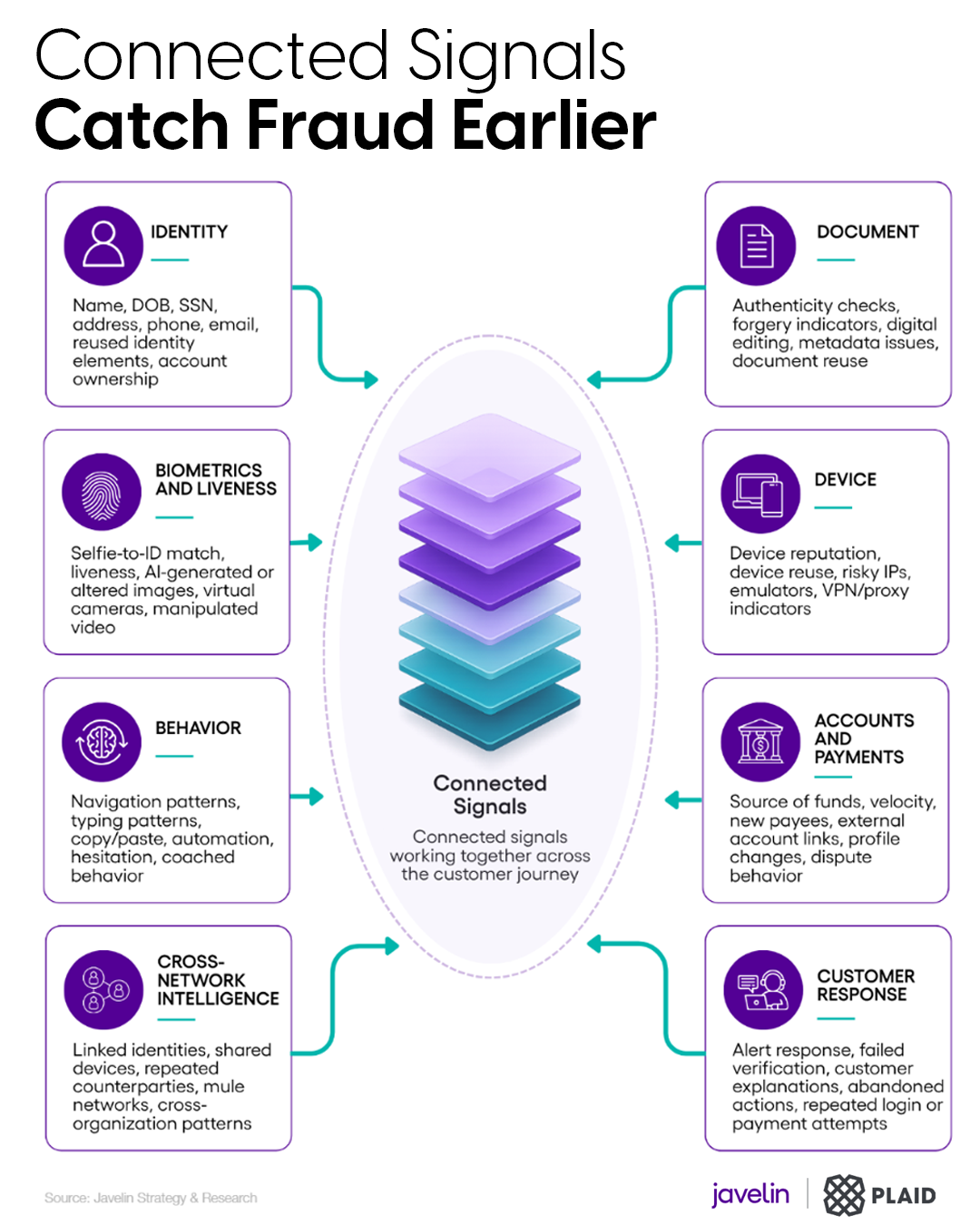
Instead, it points to 8 connected signals working together across the customer journey (see figure below 👇):
→ Identity: reused or inconsistent identity elements
→ Document: forged, altered, or reused IDs
→ Biometrics & liveness: deepfakes, virtual cameras, manipulated video
→ Device: emulators, risky IPs, VPN/proxy indicators
→ Behavior: typing, hesitation, copy/paste, coached activity
→ Accounts & payments: funding sources, new payees, velocity
→ Cross-network intelligence: shared devices, mule networks, linked identities
→ Customer response: failed verification, abandoned actions, retries
Viewed alone, each one looks explainable.
Viewed together, they turn breadcrumbs into a decision.
The key insight is simple:
A single signal can be faked.
A pattern over time is much harder to fake.
That's where earlier fraud detection is heading.
Source: Javelin and Plaid
Trusted reach among senior decision-makers in FinTech, Payments & Banking.
👉 Explore Partnership here

Comments ()