

Mastercard Strengthens Sri Lanka’s Digital Payments Ecosystem
Hey Payments Fanatic!
Mastercard is doubling down on Sri Lanka, and small merchants are the big winners.
With the launch of Soundbox and Cloud Commerce, the card network is making digital payments cheaper, simpler, and far more accessible.
Soundbox is a first in the market: a compact device that gives instant audio confirmation for every transaction, letting merchants accept QR and card payments from a single terminal, no more juggling machines or second-guessing payments.
Meanwhile, Cloud Commerce turns any NFC-enabled smartphone into a payment terminal, removing hardware costs altogether and enabling Tap & Go and QR payments on the move.
Mastercard's SME-first playbook strikes again: Soundbox and Cloud Commerce follow their LankaPay deal and India Soundbox rollout, targeting Sri Lanka's 597M digital transactions (as per 2024 numbers according to the Central Bank) as the beachhead for South Asia dominance.
In a payments world buzzing with stablecoins and agentic commerce, Mastercard reminds us that hardware still anchors the value chain.
Want to know what else is going on in the Payments world? Scroll down to find out. 👇
Cheers,
INSIGHTS
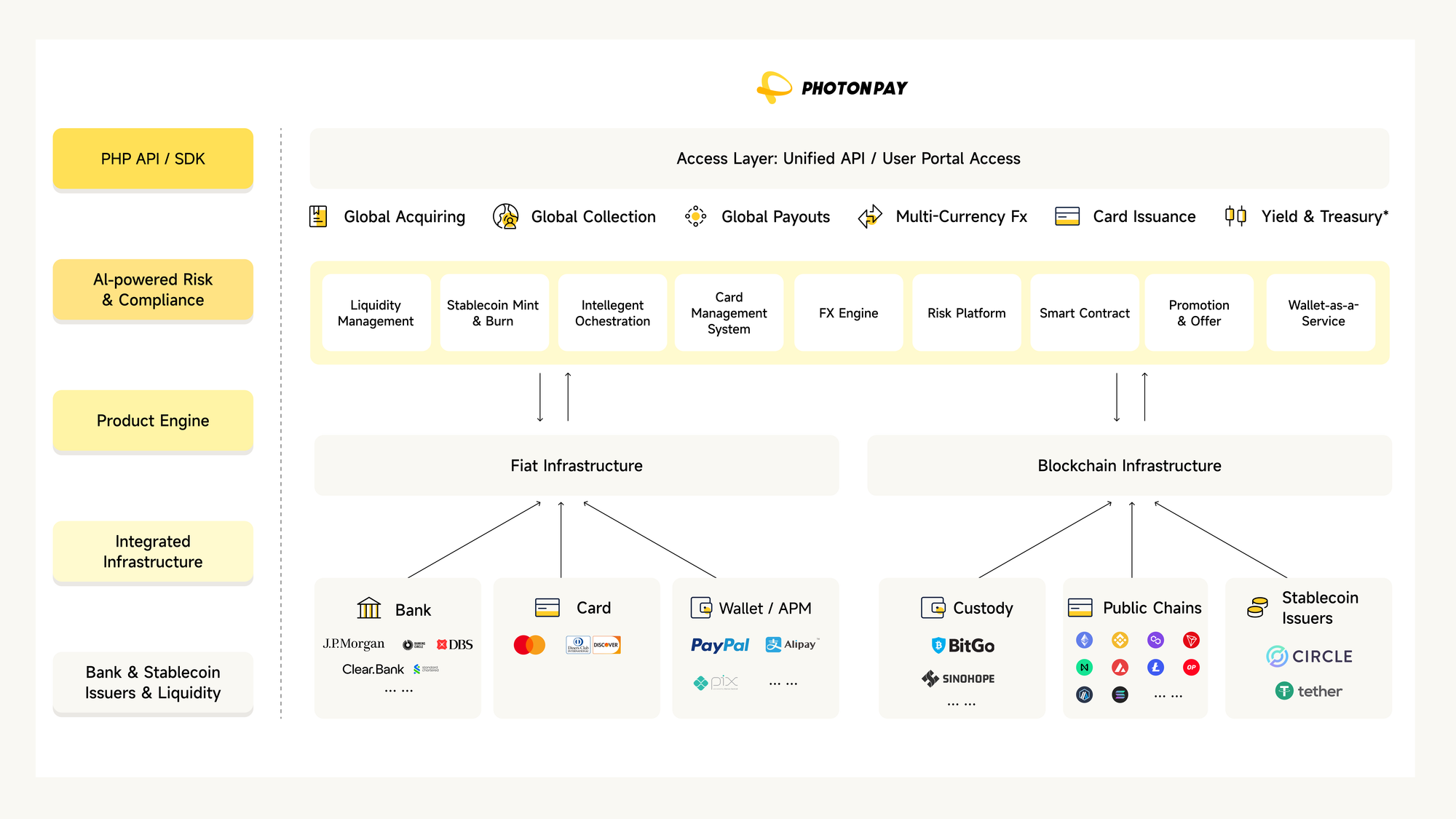
➡️ From Accounts to Tokens: The Next Evolution of Global Payment Infrastructure. PhotonPay outlines how stablecoins are evolving into core financial infrastructure, enabling faster, transparent global payments, but notes ongoing challenges around user experience, custody, liquidity, and compliance. Read the full article here
NEWS
🇱🇰 Mastercard strengthens Sri Lanka’s digital payments ecosystem with two major launches. Mastercard has launched Soundbox and Cloud Commerce in the country to expand digital payment access for small businesses. Developed with local partners, the solutions enable merchants to accept card and QR payments through low-cost devices or NFC-enabled smartphones.
🇺🇸 Mastercard joins BSSC to help advance end-to-end security across blockchain ecosystems. Mastercard’s engagement with the BSSC will help deepen the capabilities it has already brought to market, including the Multi‑Token Network and Crypto Credential, solutions designed to embed trust, security, and standardisation into blockchain and digital asset infrastructure.
🌏 dLocal and Damisa partner to expand cross-border settlement in APAC. The partnership connects Damisa to dLocal's established local payment rails across the region through a single integration, giving their merchant base immediate access to local bank transfers across key markets with no additional technical work required.
🇺🇸 Vibe Retail and Mega Payments announce strategic partnership to bring modern point-of-sale technology to independent retailers. Through this partnership, Mega Payments will serve as an authorised Independent Sales Organisation (ISO) for the Vibe Retail POS system, expanding Vibe's reach to independent retailers nationwide.
🇦🇺 Paymentology and Change Financial join forces to fast-track next-generation payments in Australia. The collaboration aims to enable FinTechs, digital banks, and programme managers to launch and scale debit, credit, and prepaid programmes more efficiently in the Australian market.
🇮🇳 Razorpay enables Google Pay for cross-border card payments. The integration allows Indian exporters to offer global customers a familiar, faster payment option, addressing long-standing issues of checkout friction and cart abandonment associated with traditional card-only flows.
🇺🇸 Veem to launch stablecoin accounts and payments for global platforms and businesses, powered by Bridge. With Bridge, Veem enables global platforms and businesses to embed stablecoin workflows directly into their products, allowing customers to accept, hold, and move funds in digital dollars as part of their day-to-day financial operations.
🇺🇸 Achieva Credit Union invests in Payfinia CUSO to expand real-time payment capabilities. The partnership allows Achieva to support new and emerging payment options, including digital wallets such as Paze, QR code-based payments, and enhancements to peer-to-peer (P2P) services.
🇨🇴 Addi secures a US$150M credit line with JP Morgan and Fasanara Capital to fuel its next stage of growth in Colombia. The BNPL provider, now exceeding $680 million in debt commitments, continues to expand in Colombia with millions of users and growing profitability, addressing limited access to credit in the market.
🇵🇭 Coins.ph launches stablecoin payments via national QR standard. The new functionality enables millions of users to pay at nearly 700,000 merchants nationwide using Philippine pesos, USDT, USDC, or a combination of these assets in a single checkout flow.
🇺🇸 Polymarket taps Bitget Wallet's over 90 million users with integration. Polymarket said allowing Bitget Wallet users to access its prediction market through their existing digital wallets provides a powerful entry point for a global user base. Keep reading
🇺🇸 Cross-border paytech Latitude steps out of stealth with $8m seed funding, aiming to improve cross-border payments using stablecoin-based infrastructure. The company offers a global payouts network via a single API, enabling faster, lower-cost transfers to over 50 markets.
🇬🇧 Paysafe introduces PaysafeWallet, the digital wallet built for the experience economy. PaysafeWallet enables customers to send, receive, spend, and withdraw money, supported by a dedicated IBAN-enabled personal payment account and debit card. This solution represents the evolution of PaysafeCard’s Account & Card into a full-service digital wallet.
🇨🇦 TD brings virtual card payments to Chrome in Canada, enabling them to complete online and in-app purchases without sharing their actual credit card details with merchants. The feature is designed to integrate directly into the checkout experience.
🌍 ClearBank names Tazapay as first Singaporean client, strengthening the Asia–Europe payments corridor. Through the collaboration, ClearBank UK will provide Tazapay with access to its UK and European payment rails, enabling real-time settlement and compliant fiat interoperability for Tazapay's clients.
🌎 MoneyGram and Stellar extend partnership to scale real-world stablecoin utility globally. Powered by USDC, the collaboration enables users to receive, hold, and cash out digital dollars, with new rollouts in countries like Colombia and El Salvador aimed at increasing financial inclusion.
GOLDEN NUGGET
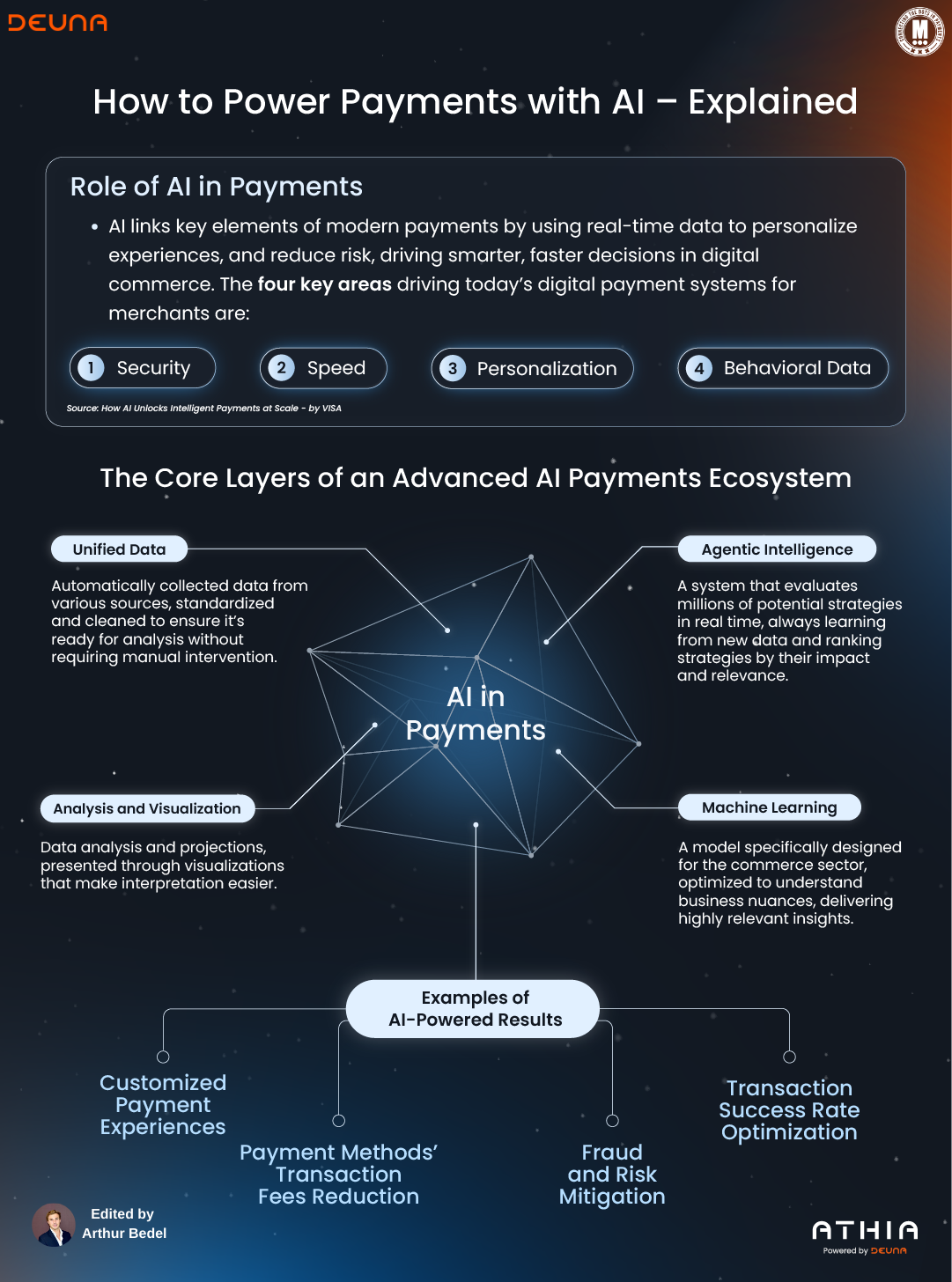
🚨 𝐇𝐨𝐰 𝐭𝐨 𝐏𝐨𝐰𝐞𝐫 𝐏𝐚𝐲𝐦𝐞𝐧𝐭𝐬 𝐰𝐢𝐭𝐡 𝐀𝐈 — by DEUNA👇Created by Arthur Bedel 💳 ♻️
Modern payments no longer just process — they reason, adapt, and optimize.
This post breaks down the architecture of an AI-native payments ecosystem — and how leading enterprises are using it to reduce friction, improve approval rates, and drive intelligent growth.
𝐓𝐡𝐞 𝐄𝐯𝐨𝐥𝐯𝐢𝐧𝐠 𝐑𝐨𝐥𝐞 𝐨𝐟 𝐀𝐈 𝐢𝐧 𝐏𝐚𝐲𝐦𝐞𝐧𝐭𝐬
AI connects the dots between data, security, speed, personalization, and behavior — enabling intelligent action in real time.
🔹 Security
→ Real-time fraud scoring and behavioral anomaly detection.
Microsoft leverages AI to detect coordinated fraud attacks across geographies, using real-time IP fingerprinting and dynamic 3DS decisions.
🔹 Speed
→ Automated decisioning and optimized checkout logic.
eBay deploys AI models to streamline its global checkout flow, dynamically adjusting the experience by market, device, and payment method trends.
🔹 Personalization
→ Adaptive routing and dynamic UX.
Checkout.com enables merchants to personalize payment options at checkout based on customer history, issuer behavior, and local preferences.
🔹 Behavioral Data
→ Continuous learning from patterns in issuer behavior, retries, fraud triggers, and consumer habits.
𝐓𝐡𝐞 𝐂𝐨𝐫𝐞 𝐋𝐚𝐲𝐞𝐫𝐬 𝐨𝐟 𝐀𝐈 𝐢𝐧 𝐏𝐚𝐲𝐦𝐞𝐧𝐭𝐬 (hypothetical examples)
1️⃣ Unified Data
→ Consolidation of data from PSPs (e.g., Getnet, Stripe, Payplug), fraud tools, CRMs, and internal commerce systems.
→ Merchant standardizes transaction-level data across global PSPs and marketplaces to enable unified performance insights and routing logic.
2️⃣ Agentic Intelligence
→ A reasoning layer that evaluates and ranks millions of routing paths, retries, and fraud strategies based on expected outcome.
→ Merchants in LATAM use ATHIA to switch routing strategies in real time during issuer outages.
3️⃣ Machine Learning
→ ML models tailored to commerce — optimizing for approval rates, fraud risk, customer type, and payment method behavior.
→ Company A uses ATHIA's ML models to proactively adjust retry windows for license renewals based on historical bank acceptance timing.
4️⃣ Analysis & Visualization
→ Data is transformed into dynamic visualizations that surface anomalies and opportunities without requiring deep SQL or manual dashboards.
→ Stripe provides merchants with visual routing breakdowns and simulated outcomes
𝐓𝐡𝐞 𝐎𝐮𝐭𝐜𝐨𝐦𝐞: 𝐀 𝐒𝐲𝐬𝐭𝐞𝐦 𝐓𝐡𝐚𝐭 𝐀𝐜𝐭𝐬 — 𝐍𝐨𝐭 𝐉𝐮𝐬𝐭 𝐑𝐞𝐩𝐨𝐫𝐭𝐬
✅ Contextual checkout experiences by geography and device
✅ Lower transaction costs via intelligent acquirer routing
✅ Higher approval rates through dynamic retries
✅ Reduced fraud and false declines with adaptive scoring
AI in payments is no longer experimental. It's the backbone of scalable, programmable commerce. Intelligence in motion.
Source: DEUNA
Want your message in front of 100.000+ FinTech fanatics, founders, investors, and operators?
Shoot me a message on LinkedIn or send me an e-mail.

Comments ()