

Circle Launches Arc: A New Blockchain Built for Payments
Hey Payments Fanatic!
Circle just switched on Arc, its new Layer 1 blockchain built specifically around financial markets, payments, and real-time money movement.
And this isn’t launching in isolation. More than 100 institutional and ecosystem builders are already involved, including Visa, Mastercard, Worldpay, Standard Chartered, BlackRock and MoneyGram. Arc also brings Circle’s USDC, EURC and StableFX infrastructure directly into the network.
The interesting part is the bigger picture: Circle is trying to build infrastructure where payments, FX and onchain finance can operate 24/7, with near-instant settlement and stablecoins at the core.
And that raises a bigger question for payments: are stablecoins becoming a new infrastructure layer rather than simply another payment method?
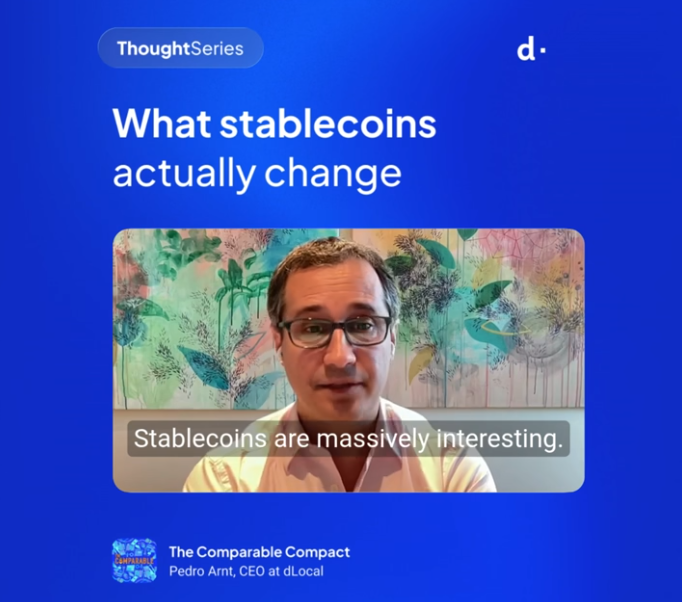
That’s exactly the question dLocal CEO Pedro Arnt explores in a recent Comparable podcast, comparing the shift to how cloud computing transformed technology — making money movement faster, cheaper and more scalable.
Here’s what else is happening in payments 👇
See you tomorrow!
Cheers,
INSIGHTS
💡 dLocal: Why Stablecoins Are Becoming a Payments Infrastructure Shift. In a recent Comparable podcast, dLocal CEO Pedro Arnt discusses why stablecoins could transform payments in much the same way cloud computing transformed technology — not by changing the underlying business, but by making money movement faster, cheaper, and more scalable. The key question for payments leaders is increasingly not whether to build a stablecoin strategy, but how quickly to build one. Watch the full conversation here
NEWS
🇺🇸 America's status as the world's crypto hub is secure, argues Shah Ramezani Founder & CEO, Noah, even if the CLARITY Act stalls in Congress. Bank and payments industry stablecoin activity already underway makes the regulatory direction irreversible, he writes.
🇯🇴 Network International expands digital payment capabilities in Jordan through Mastercard Move. The collaboration enables licensed institutions and payment service providers to access digital money movement capabilities in the market.
🇵🇰 Mastercard and Bank of Khyber partner to accelerate digital payments in Pakistan. The collaboration will expand digital payment access across the region for Bank of Khyber customers.
🇦🇹 Klarna teams up with Alza. at, bringing flexible payments to Austrian shoppers. Alza. at customers can now pay in full, in 30 days, in three interest-free installments, or via financing at checkout. Read more
🇺🇸 Circle launches Arc mainnet, an open Layer 1 blockchain purpose-built for financial markets and agentic economic activity. Arc goes live with native USDC integration, over 100 applications, and validators including BlackRock, Mastercard, and Visa. Continue reading
🇸🇦 SAMA announces cross-border acceptance of mada and HIMYAN cards, rolling out gradually between Saudi Arabia and Qatar. The initiative uses the Gulf Payment Network to enable POS and ATM transactions across both countries, advancing GCC payment integration.
🇬🇧 Apron integrates with QuickBooks Online, letting small businesses pay supplier bills without leaving their ledger. The integration supports domestic and international payments in 30 currencies with automatic bill status updates. Keep reading
🇵🇱 Amazon and Santander's Openbank Pay launch new payment options, for customers in Poland. Shoppers on Amazon. pl can now finance purchases with 30 day interest free payments or instalments up to 60 months, following successful launches in Germany, Austria and Spain.
GOLDEN NUGGET
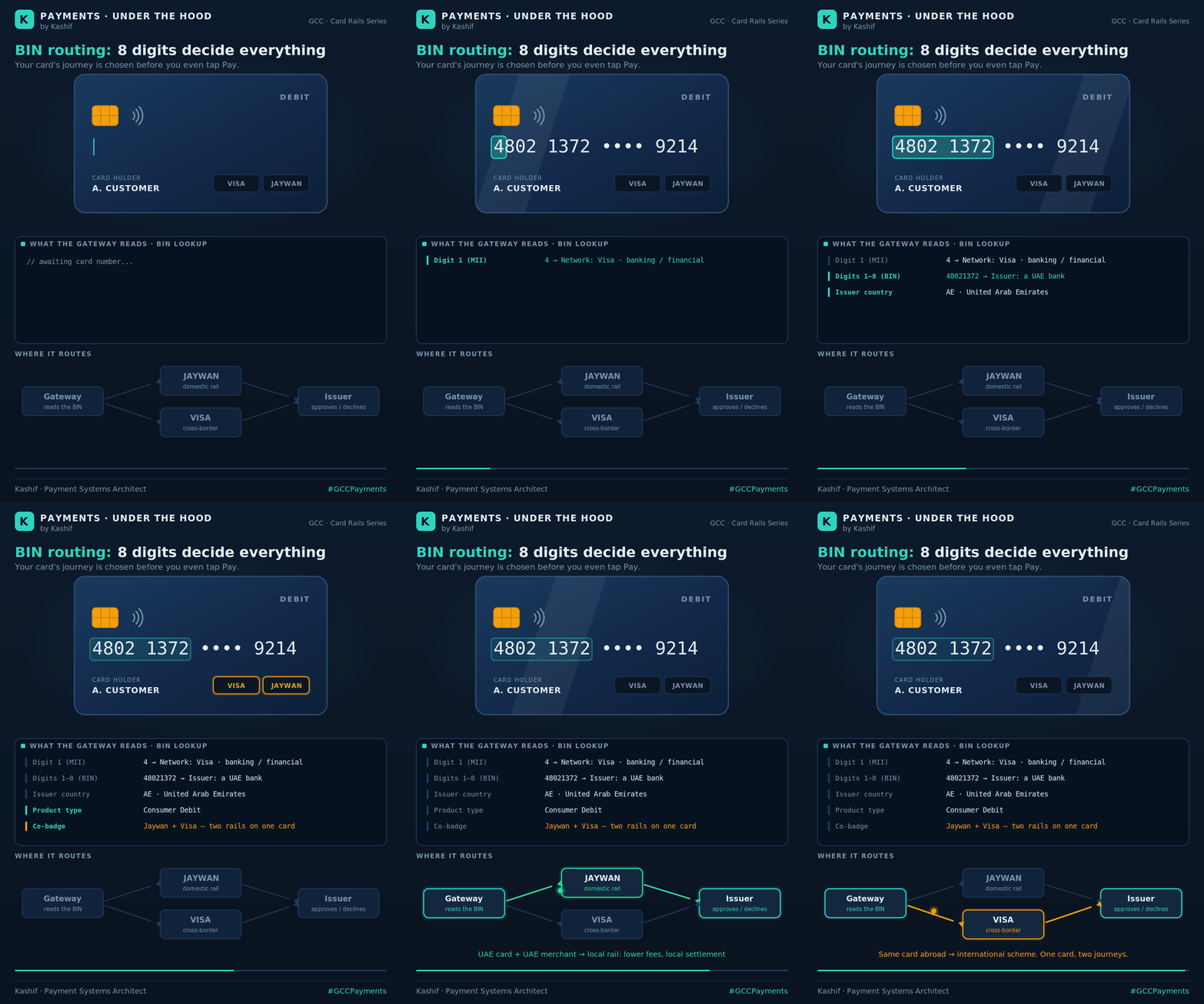
8 digits decide how BILLIONS of card payments are routed every day.
Most people have no idea what they actually mean.
Let's break it down:
Your card number isn’t just a random string of numbers.
It’s effectively a routing instruction.
Those first 8 digits — the BIN — can tell the payment infrastructure things like:
→ Which network the card belongs to
→ Which bank issued it
→ Which country it comes from
→ Whether it’s debit, credit or prepaid
→ And ultimately, where the payment should be routed
And that last part can make a BIG difference.
Take a co-badged UAE card.
At a UAE merchant, it can route through Jaywan: domestic rail, local settlement.
Use the exact same card abroad and the transaction can travel over an international card network instead.
Same card. Completely different payment journey.
This is also why keeping BIN data accurate matters so much.
Stale data can mean wrong routing, wrong fees and even failed transactions.
Payments looks simple when you tap your card.
Under the hood, it’s anything but. 😅
Source: Muhammad Kashif check here
Trusted reach among senior decision-makers in FinTech, Payments & Banking.
👉 Explore Partnership here



Comments ()